
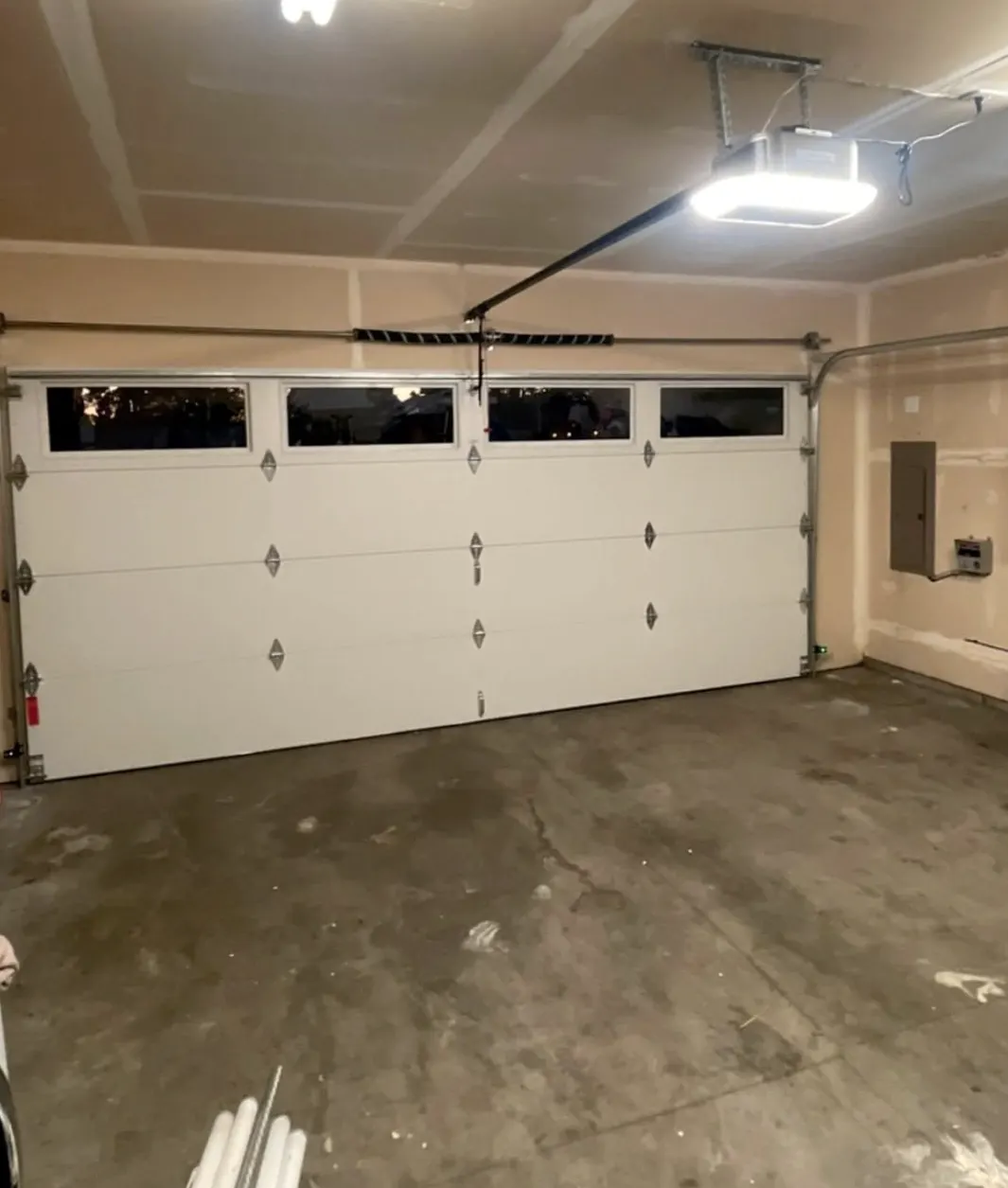
The One-Sentence Rule, and Its Exceptions
If the garage door opens, closes, and reverses when it hits something, most home inspectors mark it as working — but a door can pass that basic cycle test and still be hiding springs rated for the wrong wind load, rust eating through the bottom panel, or a track that's a quarter-inch out of alignment after years of coastal humidity working the jambs.
The exceptions matter too. A door installed in the last few years on a newer build is less likely to have salt-air corrosion, but it should still carry a visible wind-load rating label since that's part of what makes it code-compliant for hurricane season here. And a door that looks rough but was recently serviced — fresh lubrication, new rollers, clean track — can be in better shape than a shiny door that's never been touched. Looks aren't the test. Walk it.
The Walk-Through Checklist
- Wind-load rating label. Check the inside of the door or the end stile for a sticker listing the door's wind-load rating. If there's no label, the door either predates current standards or the label's worn off — either way, you can't confirm it meets the wind-load rules that matter this close to the Gulf. This is one of the most commonly skipped checks because it requires someone to actually look at the hardware, not just watch the door move.
- Bottom panel and seam corrosion. Crouch down and run a hand along the bottom panel edges and seams, especially near the floor. Salt air speeds up rust in exactly this spot, and a panel that's bubbling or flaking at the seam usually means moisture has been sitting there a while. A single rusted panel can sometimes be swapped out; rust spreading across multiple panels usually means the whole door's clock is ticking.
- Bottom seal condition. Look at the rubber gasket along the bottom edge. Cracked, flattened, or torn seals let water in during afternoon downpours and let humid air swell whatever's behind it. If the seal is brittle or gapping in spots, water intrusion has probably already started on the slab or the bottom of the panel.
- Track alignment. Stand back and sight down both vertical tracks. They should run perfectly parallel. A track that bows outward at the bottom, or sits closer to the door on one side than the other, is often a sign of a prior off-track event or slow humidity-driven frame shift — not something a quick visual glance during a walkthrough usually catches.
- Spring type and condition. Look above the door for torsion springs (a single shaft with coils, mounted horizontally) or check the sides for extension springs (stretched out along the upper tracks). Surface rust on the coils is common near the coast and isn't automatically disqualifying, but pitting, flaking, or a visibly stretched/uneven spring means it's near the end of its life. Springs are under serious tension — this is a look-don't-touch item.
- Door balance test. With the opener disconnected (pull the red emergency release cord), lift the door manually to about waist height and let go. A balanced door stays put. One that drifts up or crashes down means the springs are no longer carrying their share of the weight, which puts extra strain on the opener and the track — and it's exactly the kind of thing that feels fine on an automatic cycle test but fails the moment you lift by hand.
- Opener age and battery backup. Check the opener's manufacture date, usually on a sticker on the housing. Older units often lack battery backup, which matters here since hurricane season regularly brings power outages — a battery backup lets you open the door manually-assisted or electrically even without grid power. No backup isn't a dealbreaker, but it's worth factoring into what you'd want to add.
- Hinge and roller corrosion. Look at the hinges between panels and the rollers riding in the track. White or orange corrosion buildup, especially on galvanized hardware, is common in salt-air zones and accelerates once the factory coating wears through. Heavily corroded hinges can crack under tension; corroded rollers bind in the track and cause the grinding or jerking motion that often gets blamed on the opener instead.
- Fastener tightness at the wall and jamb. Give the track brackets a gentle check — are the lag bolts snug against the framing, or is there visible gap and movement? In humid coastal homes, wood jambs can swell and shrink enough over time to loosen fasteners, and a loose track bracket is a leading cause of doors coming off-track during storm winds.
- Manual release function. Pull the red release cord and confirm the door disengages from the opener carriage smoothly. If it's stuck, rusted, or doesn't release cleanly, that's a problem during a power outage when you need to operate the door by hand — exactly the scenario hurricane season creates most often.
- Garage floor drainage at the door opening. Check whether the slab slopes away from the garage or pools water right at the threshold. Standing water at the base of the door accelerates bottom panel rust and keeps the bottom seal wet longer after every afternoon downpour, shortening its lifespan regardless of door quality.
Why These Get Missed
A standard home inspection usually tests function — does it open, does it close, does the safety reversal work — within the few minutes allotted for the whole garage. Wind-load labels, spring pitting, and hinge corrosion require someone who services doors for a living to know what they're looking at and why it matters for this specific climate.
When to Call In a Technician
If you spot rust at the panel seams, an unbalanced door, or no visible wind-load label during your walkthrough, it's worth getting a second opinion before closing — or shortly after, if you're already under contract. Bradenton Beach Garage Door Experts can run a full Garage Door Maintenance & Tune-Up to check spring tension, track alignment, and hardware corrosion in one visit, and if the springs turn out to be undersized or near failure, our Garage Door Spring Repair service gets that fixed before it becomes an off-track emergency during storm season.
If you're settling into a new home anywhere from Bradenton Beach to Longboat Key, Anna Maria, or Cortez, give us a call — we'll walk the garage door with you and tell you straight what needs attention now versus what can wait.